Tuesday, October 26, 2010


The Mystery of the Missing Cat
prickly back arches –
black cat strays too far from home
skips back just in time

Down the hill from where I live there is a row of four mailboxes at the bottom of a path that seems to have only one house at the end of it. And on these mailboxes there stood a cat - a big, black, prickly scaredy-cat. With the metallic hairs on his tail and his back sticking straight up, he seemed to me to be the epitome of the typical Halloween cat. This picture was taken two weeks after Halloween last year. Sometime in September this year, I noticed that it was no longer there. Someone had apparently knocked it off. I've put an invitation to our exhibition in the mailboxes, explaining to them that a photo of their cat is hanging in the DAZ. If they get in touch with me, I'll let them have the picture.

The times and dates of our exhibition have been extended. There's still time to go see it!
Halloween
Hexe Lilith
 The whole magic of autumn - for Tiffany - revolves around Halloween, the evening before All Saints' Day. It was known as All Hallows' Evening and over the years was shortened to Hallowe'en. The holiday seems to be most fervently followed in the US, where some neighborhoods work up to it for months!

our leaf-thin children
scatter through the neighborhood
yelling “Trick or treat?”
The past several years - ever since our kids could dress up in costumes - we've gone trick-or-treating around the neighborhood. Last year we covered a big round through our old stomping grounds in Gaisburg. It seems that the teenagers there have also heard of Halloween. Several were spotted throwing eggs and sacks of flour at cars and houses. That's not the type of tradition I want to see develop here in Germany!
Otherwise, we had a nice walk through the streets and loads of treats to share once we got home.

Thursday, October 21, 2010

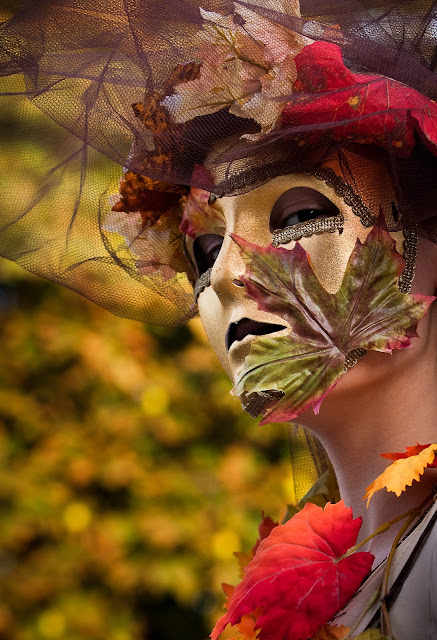
Autumna


proud Autumna mocks 
winter’s icy bitter breath
with her sweet colors

 This young woman walked in front of my camera at the Venetian Days in Ludwigsburg in September 2010. It was the right mixture of skilled setting up (so that the colors of the fall trees would be in the background of the picture) and a bit of luck. 
I took hundreds of pictures that day and on into the evening, but when I got home and saw this picture, I knew it had to be part of this exhibition. A few days after I took it, I went back to Ludwigsburg (10 km north of Stuttgart) and found her again. I asked her permission to use the picture and was graciously given permission. I wonder if she kept my card and went to see herself at the exhibition...


The Turning, Part 2

Shortly before the summer vacation 2010, there was a major amount of turn-over at the DAZ, where we were planning to exhibit our work. We had been given oral confirmations that everything would work out, but with Friederike leaving for Freiburg, we weren’t sure if things would work out; in our eyes she seemed too instrumental to the success of the show.
But then came Christiane Pyka and Miriam Bender, who have shown great support, enthusiasm and patience for our endeavor. A great teacher, Jim Palik spent a great amount of time and effort helping us mount and frame our pictures. He and his wife were very gracious with their time. 
Tiffany, Jim and Jane prepare a pastel print for framing

After having initial difficulties in making a selection, I was finally able to do so by narrowing down my choice of images to those that have some sort of magical, fairy-tale aspect to them so that they go well with Tiffany’s illustrations.
Tiffany teaches several English classes at local schools and has been able to involve her pupils in the project. Her vision of creating an autumn installation to complement the pictures has been realized. 

The Turning, Part 1

The Turning, Part 2

http://www.youtube.com/watch?v=l4O-QP9NkPw
My children helped make some of the decorations, as did Tiffany's son Nicola. Their school classes will come visit the show this week and hear Tiffany's story.
And now, for those of you who cannot make it to Stuttgart this October or November, we would like to present to you the pictures at our exhibition.
I'll start with the first three and then in subsequent posts present the rest.
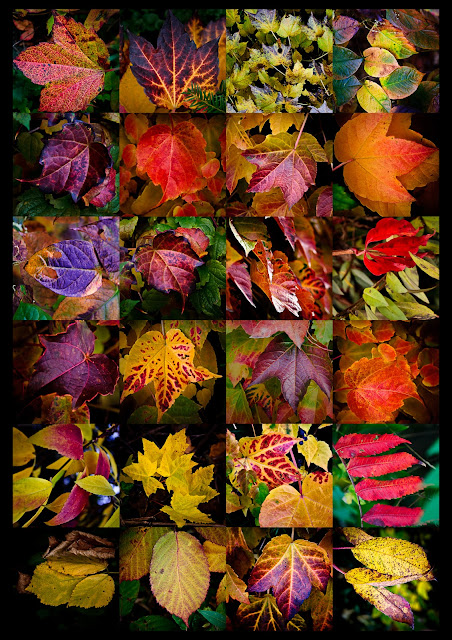
These mosaics or patchwork leaf pictures resulted from the thousands of leaf pictures I took during the fall of 2009. As the beautiful, long season progressed, I noticed the natural motifs changing from colorful trees and bushes full of leaves (as in the first picture) to single leaves hanging on the ends of bare branches.

Fall

fall’s warm color display
lines the way, captures eyes
with nature’s palette


Falling

one last leaf outlasts
November’s storm – those stubborn
frosty fingers!

Fallen

nestling communally–
a village of brotherly leaves –
then a great gust blows
I wrote haiku for most of the pictures in the exhibition and printed them all on a sheet of paper, with captions for Tiffany's pictures from her story on the back of the paper. Visitors are then asked to be active in searching for the picture that matches the poem or caption. Here I've done the work for you already.
For the German visitors (and for the part of me that likes composing in German), I wrote some haiku in German. For the three pictures above, the titles follow a linguistic progression of their own:

 herb

stacheliges Blatt!
genieße die Baumkrone
stolz und farbenfroh
herber
ihr langen Nächte –
naht und nagt an Stielen
mit eisigen Zähnen
herbst
gefallenes Blatt!
bald lassen kalte Winde
dir keine Ruhe 


Monday, October 18, 2010

Backtrack: Why photography? Why me? And why now?

I made my first photo book when I was in seventh grade. My father had given me a second-hand 120mm film camera that used those old single-use flash bulbs. Sometimes they worked and sometimes they didn’t. You had to put them in just right so that the contacts were touching the right part of the bulb. I think a roll of film cost about $1.25 for 12 pictures. Junk mail in those days often included mailers for photo processing. So I would send the long roll of film into the lab, paying about $2.50 for the development and printing, wait a week or 10 days and then be able to see which pictures had turned out. 


An excerpt from my first photo book, c. 1975

When I was in high school, Joei Barrios lent me one of her 35mm cameras, a Canon Ftb QL with a 55mm lens. That was my equipment for the next three years – no zoom, no flash, no tripod, but was blessed to be able to gain experience as a yearbook staff photographer and have the processing of hundreds of rolls of film paid for by the publications department of my high school

Californian artist Juana Olga "Joei" Barrios, 1980
I published hundreds of pictures and, as editor, learned to crop and layout the pictures. My mentor, Jim Coppens, was a great teacher with a very good sense of aesthetics. He also taught me to write and edit, two skills which help me keep bread of the table today.
Upon graduation from high school, my mother, who is an artist, traded one of her Georgia O’Keefe-style flower paintings for the Canon. Nothing Freudian about that, is there? Anyway, I was the guy with the camera in Europe, in college and in my first teaching job, where I worked as the adviser to the yearbook. There I taught the students everything I knew about event, group and sports photography, writing, editing, typing, layout design and artwork. On the side I taught German, American literature and computers and coached the soccer team. Over those four years I had the opportunity to photograph several weddings for family, friends and colleagues. They would buy 20 rolls of film, pay for the processing, let me pig out at the buffet and give me a backstage pass to the bride’s dressing room. That was fun!
My Canon was stolen one night by the school’s cleaning crew and before the insurance company could settle the case, I needed a new camera because I had to photograph a colleague’s wedding a couple of weeks later. So I bought a Nikon 4004s with a 28-85mm lens, a combination which was perfect for weddings and other events. I was given a flash as a present for taking pictures at one wedding, so that was my gear for the next ten years.
After moving to Germany, music became my means of artistic expression for a while, and photography remained a means of capturing memorable experiences with good friends. Some of my pictures from hikes in the Alps are “pretty” but I never really thought about creating artistic works of art with my camera.
Then came the children. And the first digital cameras. So I bought a 5 MP digital point-and-shoot Traveller from ALDI when my son was one. I had gained some experience with photo editing software in the meantime, so it was not difficult to make minor adjustments to my pictures before having them printed.
Then came Christian Ruvolo. I had known Christian for ten years by then. We had always enjoyed music and cooking together, but in 2007 he bought a Casio Exilim and discovered digital photography as an art form. He is a brilliant concert pianist, composer and all-around musician and does anything he really enjoys at a very high level of competence. When I visited him in Italy for capo d’anno (New Year’s Eve) in 2007-2008, he bought me a 7.2 MP Exilim because he saw how sad I was about my camera’s weak battery pack and inferior pictures.
Then he bought a Canon 450D.
Then I bought a Sony Alpha 300.
Then he bought two L lenses for his Canon.
Then I bought lots of cheap Sony/Minolta lenses on ebay.
Then he learned about flash photography.
Then I bought a Sony A700.
Then he bought a Canon 5D Mark IV.
Then I bought flashes and the Joe McNally book he recommended.
Then he bought more flashes and reflectors and umbrellas and California sun bouncers.
Then I bought reflectors and a big bounce and a third camera bag for my third Alpha.
Then he got his website going.
Then I started a photo blog.
Then he started doing incredible portraits of the music students where he teaches.
Then I did some portrait shoots and enjoyed it.
Then we photographed the same model here in Stuttgart (twice) and had a blast.
And we went on the Worldwide Photo Walk together with my son, his godson.
Now we share our day’s work via Skype. We critique each other’s work and give each other tips on post-processing. It’s been a symbiosis of the grandest kind.
Add to this chain of events the support of my friends who make me aware of photo contests and opportunities and of course the unfailing patience and support of my family and you get a somewhat accomplished photo-fanatic.

Friday, October 15, 2010

The Turning, Part 1

Autumna

The idea of doing an exhibition germinated last year just before Christmas, when Tiffany saw some of my photographs from autumn of 2009. She had just done an evening of Halloween storytelling at Starbucks which Fiona and I had enjoyed. We started brainstorming about how we might do it, and when we presented the idea to Friederike Schulte at the DAZ, she sounded enthusiastic about it.

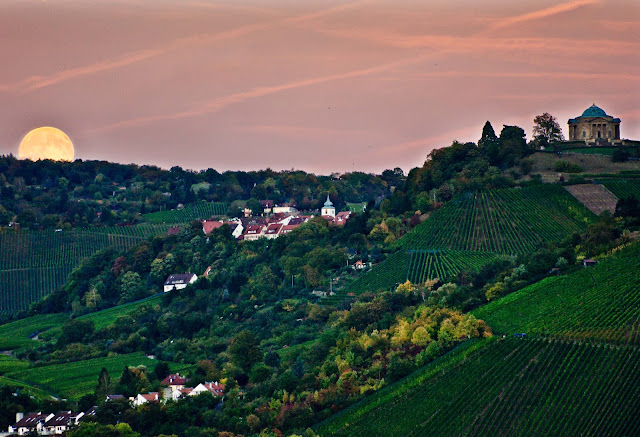
Moonrise over Rotenberg

After I found out that an autumn moonrise picture of mine won second prize in the Stuttgart Marketing photo contest, I was encouraged to pursue the idea of an exhibit more seriously. Tiffany and I met with Thomas Kraut, who offered to help us along the way. He met with us several times, looked at the rooms, viewed my photographs and ultimately designed the wonderful invitations for us. He also is the father of the star of our show!

Lilith 

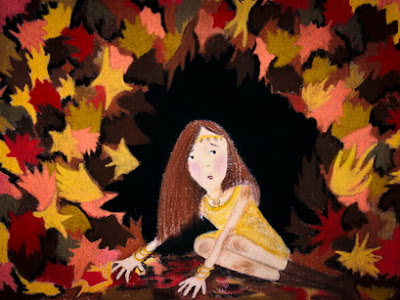
Tiffany and I met regularly to show each other our work. I read her story and shared my thoughts on it with her. She looked at my photographs and told me which ones she liked best. Her illustrations were partially inspired by my pictures.

Jamie in the leaf cave

Fall 

Another person who helped us tremendously was Jim Palik. We all knew each other from the writing workshop which we had been attending at the DAZ. Jim is a professional photographer who studied with Ansel Adams in California in the 1960s. When I got my first digital SRL in December 2008, I enthusiastically showed him the first selection of “good” pictures I had taken. He was very kind and patient in explaining how I could improve my photography.
Panorama in Beilstein

Over the next year, I learned a lot from him by seeing his exhibitions and those of his students from the HDM and by talking to him about photography. I also read and practiced a lot. I averaged about 3,000 pictures a month and post-processed nearly all the pictures with Adobe’s Lightroom software.

I still am not brave enough to use Photoshop, though I have taken some forays into some other software jungles such as Corel’s Paint Shop Pro and GIMP. In the past year I’ve learned how to do just about all the post-processing necessary in Lightroom. It’s not a perfect program, but I’ve learned to use it well.

Now a look back at my photographic history.

Sunday, September 19, 2010

Fynn turns 9

Let’s hear it, parents: “I can’t believe my baby boy is nine years old!!” Hmmm. Nine is just a number. He’s still the great little boy he’s always been. This summer he seems to have grown up quite a bit, though. After spending two weeks at day camp on the Marienburg on the hill behind our house, he went to a three-day soccer camp with 55 other boys and girls. The third day of the camp was his birthday, which he let the coaches know. That morning he was called into the middle of the circle and everyone sang “Happy Birthday” to him. I think this kind of high-focus attention would have driven him to tears a year ago, but he said he enjoyed it. Plus, they gave him an official EM 2006 soccer ball, a T-shirt and a big bag of gummi bears! I think it was nice for him to have a lot of attention on his birthday because we’re usually on vacation then, so he can’t have all his friends over. This year several of the friends he invited were on vacation themselves.


We celebrated his birthday the following Sunday. He wanted to play soccer with his friends at the Marienburg. First we ate cake and Fynn opened his presents. A new soccer ball! A VfB water bottle! A yard tennis set! All great presents. The wrapping paper from the ball was a big hit.


Bianca and I had set up a treasure hunt for him and his friends. On that hot August day, I rode around the neighborhood, drawing arrows on the sidewalk with chalk which showed them the way - sometimes the wrong way. At five appointed places, they had to find a yellow envelope with a task in it that they needed to solve before they would get the treasure. So with water bottles in hand (it was in the high 90s), they headed off on the big chase.
Fiona seemed to have the best eyes for finding the envelopes. And now that she can read, she was a big help in solving the mysteries.

After an hour of soccer, Bianca helped the boys learn a funny little poem by heart (one of the tasks) before they headed to the last stop on the hunt. In typical pirate fashion, the last clue was written in code, so they all helped break the code so that they could find the treasure chest, which was filled with bags of goodies.

And all the time Julia took it easy in the Baby Björn.

When we got back home, the boys had hot dogs and lots of juice before they headed home.
The Turning

I would like to invite you all to visit my exhibition in Stuttgart in October and November. The Deutsch-Amerikanisches Zentrum is hosting an autumn exhibit of works by Tiffany Estrada and me entitled "The Turning". It will be much more than just an exhibition, though. Storytelling, an installation and a photo walk on October 30 are all part of the fun. Come join us on October 14 at 6 p.m. for the grand opening or view the works on your own time Tue.-Fri. from 9-1 pm or 2-5 pm in the DAZ at Charlottenplatz 17. The show will hang until Dec. 3.

Monday, August 30, 2010

Stuttgart 21

"Mit einem lachenden Auge und einem weinenden Auge."
When the Germans are undecided about an issue or situation they often use the expression: with one smiling eye and one crying eye.
Well, there are not many people in Stuttgart these days who are on the theoretical fence about the multi-billion-euro project to bury the train station in the center of town and sell the expensive real estate where the tracks used to be. Continuous protests are being carried out around the clock, resulting in hundreds of Stuttgarters meeting at the very real fence at the train station to discuss their further strategy and to inform passers-by. Weekly protests have been drawing up to 50,000 citizens - even in the rain, Friday evenings, during the school holidays no less - to form human chains around the train station and parliament building. The protests have certainly brought some people together, but the issue is threatening to drive a spike through the heart of Stuttgart and many Stuttgarters.
One urgent issue is the cost of the project. It is, as this tree squatter will have us know, beyond our monetary means. We can't afford it at the cost the experts are now quoting. In Leipzig they dug a tunnel from the main train station to another one under ground this past decade and have already ended up spending twice what they had estimated. And it was not finished in the estimated seven years. It might be finished after 13 years of construction. Will it be any different here in Stuttgart? Will they finish here in Stuttgart - amid such protests - in the 10-year time-frame?

Just before
Just after
Fynn and I went on a tour of the train station before the demolition began. An architect explained to us how it had been constructed in the early 20th century and with what care many of the details had been handcrafted: the stones of the facade, the steps, the staircases, etc. I'm no particular lover of architecture, but I could certainly appreciate the highlights which he showed us. 

The day of the tour, the post office was being moved out of its offices in the north wing (first picture above). This past week, the the rooms we had been shown were no longer there (second picture above).


In the meantime, fences had been placed around the north wing because construction was to begin and equipment would be brought in which would have to be protected. In Germany you are not allowed to trespass beyond a construction fence. ("No trespassing" signs are not necessary; every German knows this rule.) However, this fence quickly became a notice board, with concerned citizens expressing their hopes and fears in delightfully artistic and clever ways. Many posters and signs also aimed below the belt.


The fence was soon compared to the Berlin Wall and probably even to the Iron Curtain. But those in charge of the construction feared it wasn't imposing or secure enough. They built it even higher so that there would be no chance of protesters getting over it. Watchmen oversaw the construction from the rooftops as protesters questioned the workers' motives and insulted their intelligence.


Some protesters did in fact get around the fence and climbed up to the roof after the demolition finally began. Calling the mayor an arsonist on their sign, they urged him to leave office. After a few hours, the brave yet sunburned seven were escorted back down by a specially trained unit of policemen. The mayor opened the wine festival in town that afternoon.
The point of these demonstrations is to get the politicians to talk to the people, to explain the real reasons why this project is being carried out. Many citizens believe that it is a matter of prestige and nothing more. In addition, the democratic process seems to be running amok here.
 The Mercedes Star on top of the tower can now be seen from the north side of the station.

Aside from the political shadiness, there is obviously big money to be made by many local companies in the areas of demolition, construction, tunnel building, etc. Taxpayers all over Germany fear that the project will divert their income tax to such "folly" instead of going into education. The poor advertising agency that has been trying to inform the public about the issues has pointed out that this allotment of money can be used only for this project. 
Now, you may be wondering how I can report on this project so neutrally. Where is my rage? Well, I've never been a fiercely political person and I'm not what most people would call a fighter. Perhaps I'm too afraid of losing. But there is another important reason why I refuse to let Stuttgart 21 upset me any more than it already has. And it has. Every time I walk past the protesters, I feel rage boil up inside of me. And I remember my first day ever in Germany back in June 1980. 
Thirty years ago, several houses in Freiburg that had been the home to squatters for months were suddenly cleared out by SWAT teams amid a sea of thousands of policemen. When my sister Susan and I arrived for a summer of fun and language learning at the Goethe Institut, what greeted us were not the idyllic pictures our German teacher had shown us during a slide show before we embarked on our trip. After a long journey, we were forced to get out of the streetcar  with our heavy suitcases that evening and walk through town out to the youth hostel because tens of thousands of students and several thousand policemen were fighting on the streets when we arrived. "Stacheldraht" (barbed wire) was one of the first new vocabulary words I learned that summer. I have never been able to forget it.
I don't want to see my present home town divided by this project. It was a bad enough thought to imagine their digging a tunnel under our house so the trains can get to Untertürkheim where they will washed (!). I tried to imagine what it would be like to have hundreds of trucks transport hundreds of tons of dirt on the already busy street near our house. I joked with friends about being able to board the ICE train from my basement office. No laughing matter: The notion of traffic chaos in town until Fiona starts college was enough to make me want to move somewhere - anywhere - else.
If you are reading this, you know I like photo opportunities. Concerts, parties, parades, sporting events: if it promises to fill my frame with interesting motifs, I'll be there. So I've walked past the station a lot recently, and not only to the camera store on the opposite side of the street! But when I was there this past week, bitter memories were revived as I observed the changing of the guard when a tired and sweaty platoon of police officers marched away from the station past the adjoining LBBW bank building.
I followed the troop as far as the interesting walkway (the yellow structure in the reflection above) and then snapped some shots from the higher vantage point. As I was coming back down, two men right behind me made a point of saying loudly, "Tear it down! Up with Stuttgart 21!" They assumed that anyone with a camera within a mile of the train station must be a protester. Their aggressive tone was aimed at my back.
As I turned around and snapped a few pictures of the talking heads, my simmering rage actually caused me to say something to them. "Say that when you get up there in the crowd," I challenged them.
"Oh, we will. We will," they promised.

As the older one made a motion that reminded me of a cowboy drawing his revolver and the younger one finished his ice cream...
 ...I worked my way into the crowd and watched to see what they would do. As they walked past me, I said, "Say it now. Say it loud." And they did. "Tear it down! Rip it down!" the cowboy said. They were then barraged by shouts of protest from several people around them.
So they quickly turned and walked away.
I don't seek confrontation. I don't need this upheaval in my life. The Taoist in me is beginning to speak a bit louder than usual. Letting go and letting God is starting to sound good right now.